UX / UI design
The Mindful Athlete
A mental-health companion for young athletes designed to make everyday stress management low-friction, private, and stigma-free.
In sport, "tough it out" is a value system. It's also why so much athlete distress goes unspoken until it becomes a crisis.
The Mindful Athlete is a preventative tool that gives athletes a low-stakes, daily way to manage stress before it escalates, meeting a culture that discourages talking about mental health with something private, routine, and easy to start.
The problem
Athlete mental health is a distinct and under-discussed issue. Roughly a third of athletes experience mental-health concerns, driven by performance pressure, the physical and mental demands of training and competition, injury, and constant evaluation. On top of that sits a culture that rewards pushing through and treats emotional struggle as weakness.
An estimated 35% of athletes experience mental-health concerns, yet a "tough-it-out" culture keeps most of them from ever raising it.
McLean Hospital, cited in project researchWho it's for
The app targets athletes aged 18–25 — a window when the transition into college or professional sport stacks new pressures and larger commitments onto athletes who may be living independently for the first time.
What it sets out to do
- Accessible. Support that fits a demanding schedule. Usable at home, in class, or on the sidelines.
- Preventative, not clinical. A first-line tool for managing stress, with clear pathways to professional help and never a replacement for it.
- Empowering. Techniques athletes can carry with them, building a sense of control over their own wellbeing.
Personalizing from the first screen
The app opens by asking, not assuming. A short quiz tailors the experience to the individual athlete before they ever reach a dashboard so the daily focus they get is relevant to their sport, their sleep, and their life outside it.
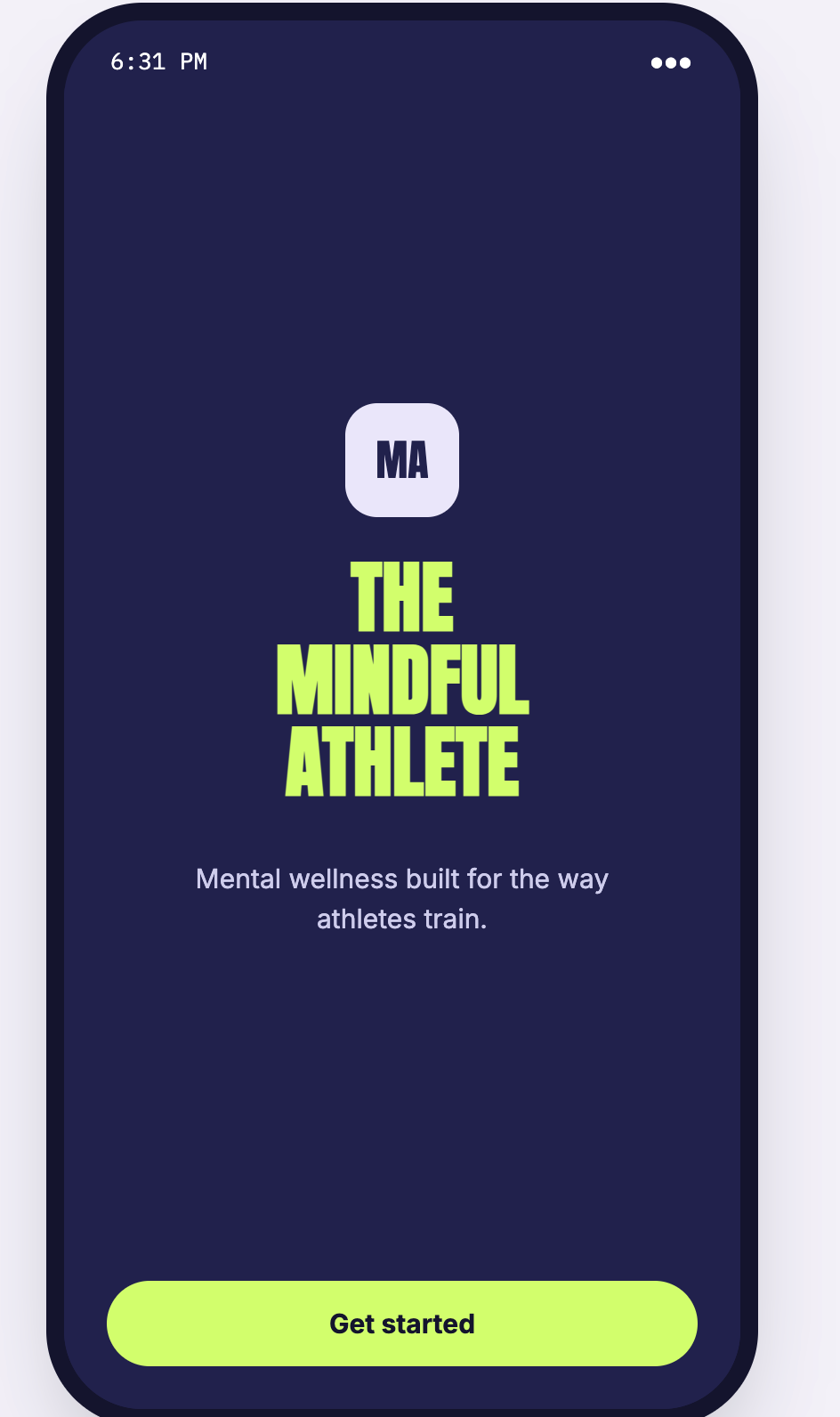
The onboarding screen sets the tone the whole product depends on: calm, plain-spoken, and framed around the athlete's own goals rather than a clinical intake. Four questions shape everything downstream:
- How do you feel before games?
- How are your social connections?
- How many hours do you sleep?
- What hobbies do you have outside sport?
Onboarding screen from the interactive prototype.
Grounded in a behaviour-change framework
Rather than designing on instinct, I anchored the product in Social Cognitive Theory and its central idea: behaviour changes when a person's confidence in their self-efficacy grows. That gave the whole experience a spine.
Personal factors
An athlete arrives carrying high stress and performance anxiety. The starting state the product has to meet without judgment.
Behaviour
They learn stress-management techniques through small, repeatable in-app actions rather than one big intervention.
Self-efficacy
Tailored advice and positive reinforcement, like praise for completing a breathing exercise and streaks for daily habits, build confidence that they can manage their own mental health.
Benefit
The outcome the loop drives toward: lower stress and improved mental health, reinforced each time the athlete returns.
Designing the daily experience
A focused, low-friction dashboard
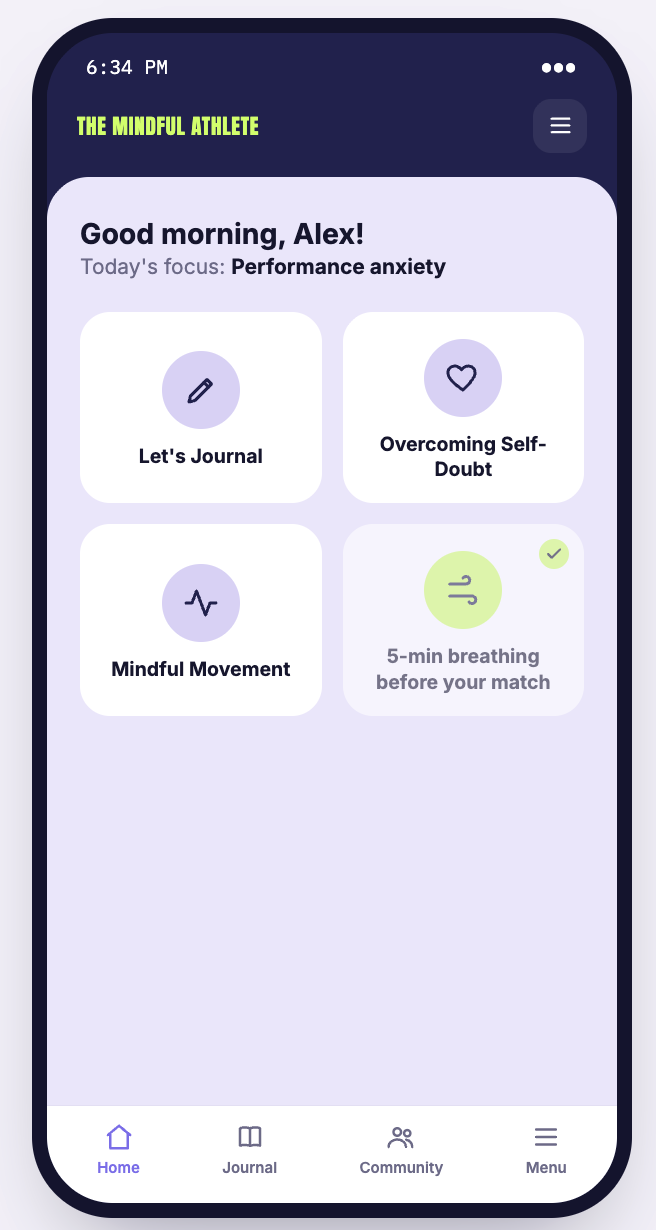
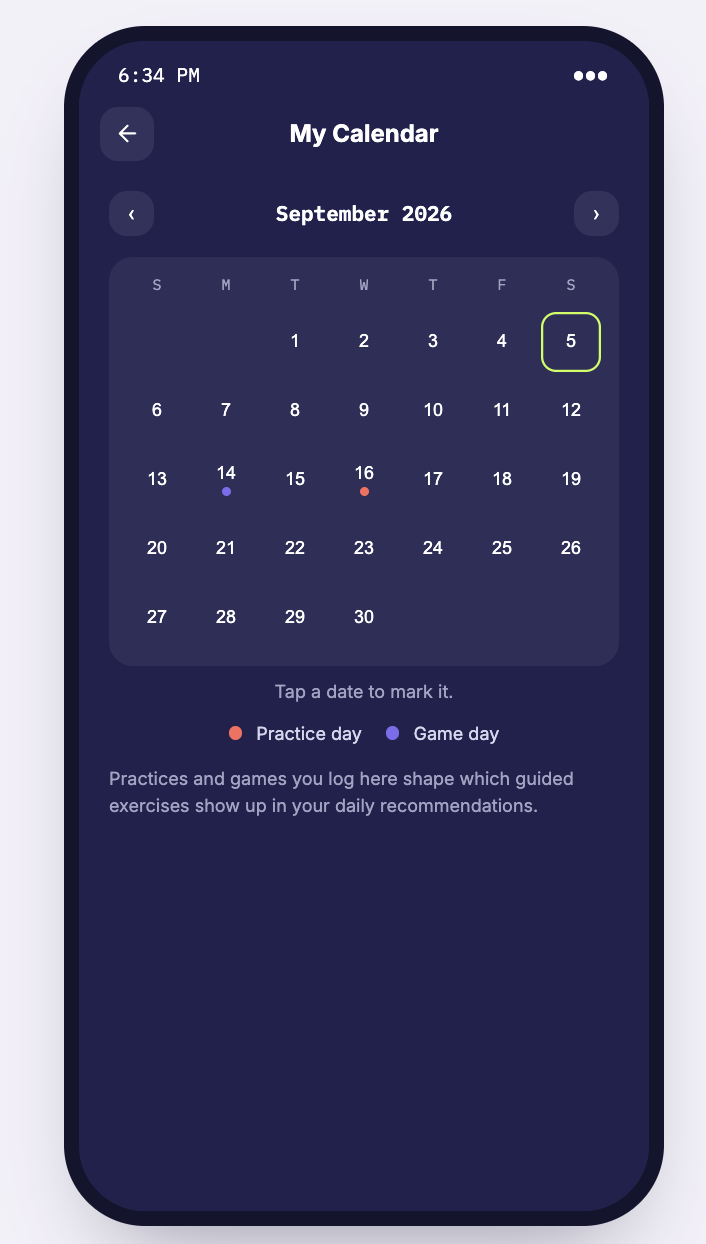
Each morning opens on a single focus of the day, like performance anxiety on a game day — curated from the quiz and the athlete's calendar. Beneath it sit a few small tasks: a journaling prompt, a mindful-movement suggestion, and a short breathing exercise before the match. Completing them checks them off and keeps the habit visible.
Journaling that lowers the barrier
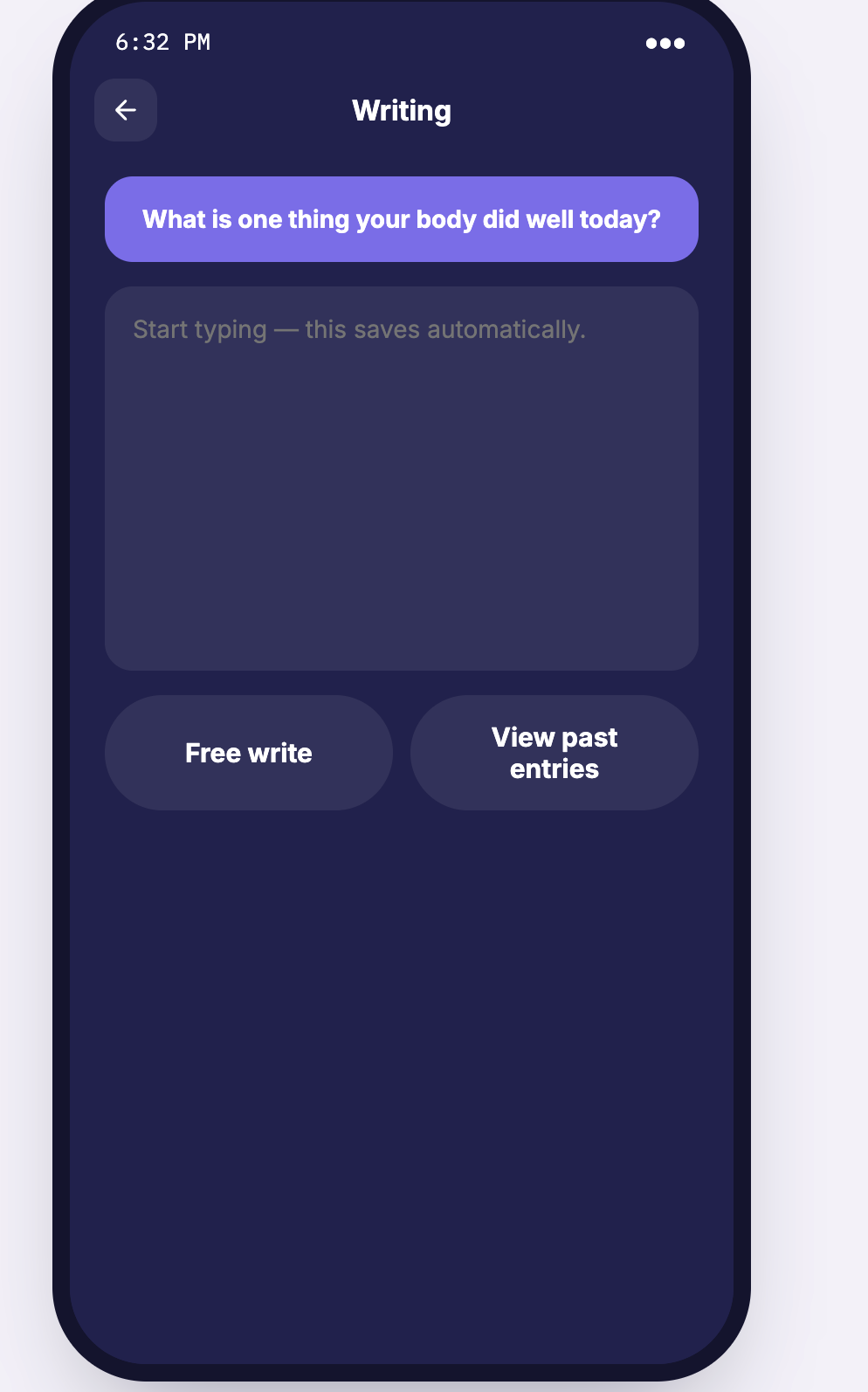
A daily prompt gives athletes a starting point when a blank page would stop them, with a free-write mode for when it wouldn't. Entries save privately, and past entries stay retrievable so progress is something they can actually see.
A check-in that takes one tap
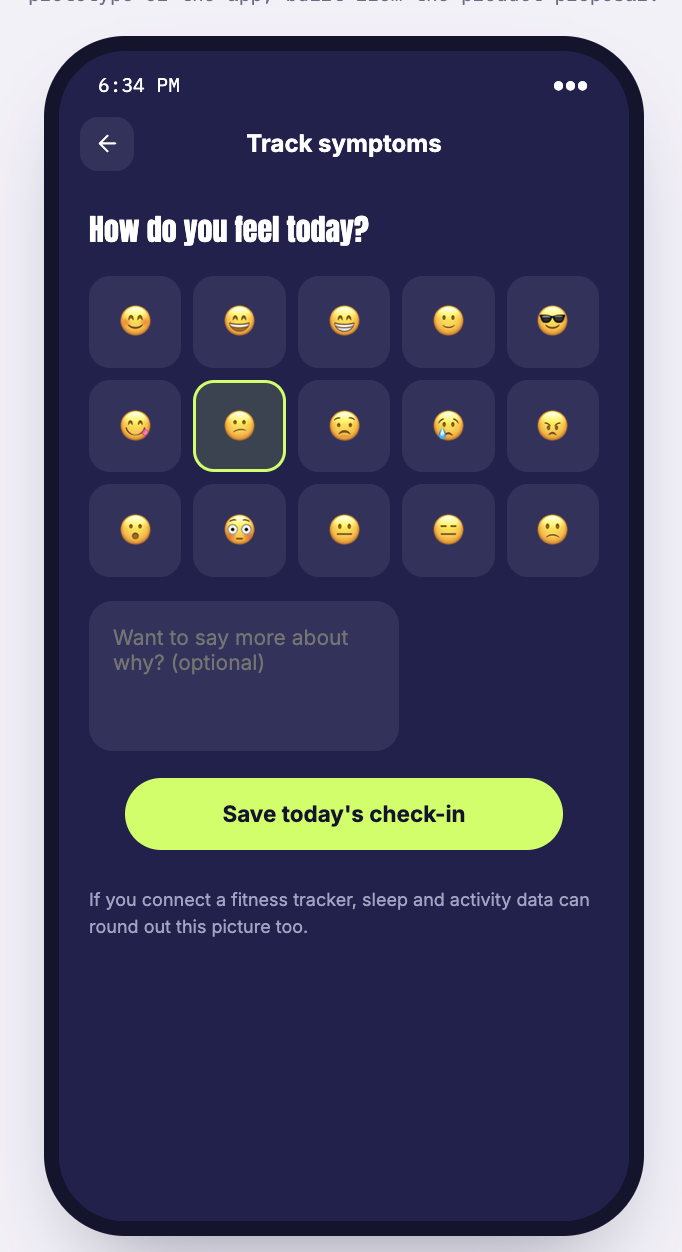
Mood tracking uses an emoji scale rather than a form, because the fastest possible check-in is the one that survives a 6am practice. An optional text field catches the detail when an athlete wants to elaborate.
A clear line to real help
Beyond peer support in a moderated, optionally-anonymous community, athletes can book 15- or 30-minute sessions with certified professionals, and emergency resources stay one tap away.
Try the working prototype
Experience the interactive prototype of The Mindful Athlete, featuring onboarding, daily check-ins, and core mindfulness flows.
Reflection
Designing for mental health forced a discipline I now bring everywhere: every feature had to earn its place against the risk of adding pressure to an already-pressured user. Grounding the work in Social Cognitive Theory inspired features to build the athlete's confidence.
If I took this further, I'd pressure-test the daily load with real athletes to make sure the routine feels supportive rather than like one more thing to perform . I'd also want a sports psychologist reviewing the boundary between the app's everyday tools and the moment a user needs a human.